THE ROLE OF RITUALS: PRE- AND POST-GAME CHECK-INS FOR EMOTIONAL SAFETY

Introduction
Roll2Heal exists to provide Veterans, First Responders, and Healthcare Professionals with a safe, supportive community where tabletop role-playing games serve as therapeutic and recreational tools to foster connection and alleviate stress related to post-traumatic stress disorder (PTSD). Although facilitators and players are not licensed therapists, the intentional structure of each session—including opening and closing rituals—plays a critical role in creating the emotional safety necessary for meaningful play.
Sebastian Junger (2016) argues in Tribe: On Homecoming and Belonging that modern society has largely lost the small-group rituals that once reinforced belonging and psychological resilience after trauma. Military units, firehouses, and emergency departments historically maintained their own rituals—debriefs, shift-change conversations, and shared meals—that served the same protective function. Roll2Heal consciously reintroduces these rituals in a gaming context so players can experience the same sense of “we’re in this together” that Junger identifies as a buffer against isolation and despair.

Why Rituals Matter in Trauma-Informed Gaming Spaces
Ritual signals predictability in an otherwise unpredictable hobby. For individuals who have experienced combat, disasters, or repeated exposure to human suffering, unpredictability itself can be triggering. A reliable opening and closing ceremony tells the nervous system, “You are safe here; the structure will hold.”
Pre- and post-game check-ins are micro-rituals—typically 3–7 minutes each. They are not optional “if we have time” activities; they are as integral to the game as character sheets and dice.
Here is a Pre-Game Check-In Ritual idea that you could use:
Begin the sessions the same way:
The Game Master (GM) welcomes everyone and reminds the table: “We are peers supporting peers—no one here is a therapist, but we all look out for each other.”
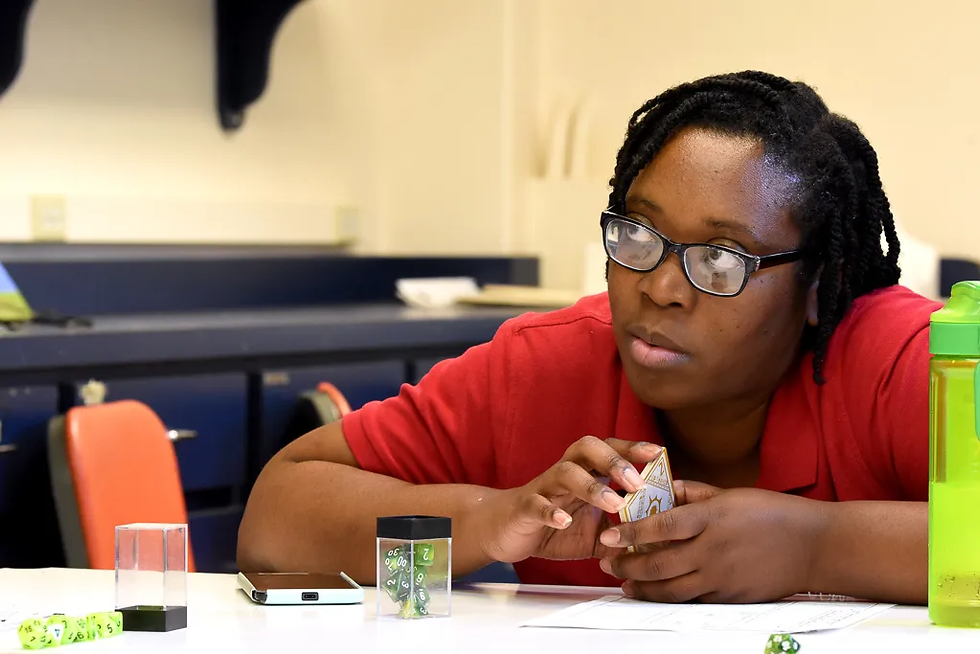
Each player (including the GM) draws one card from the Deck of Player Safety (Luxton, 2021) and shares:
Current emotional/weather report (“I’m partly cloudy today”)
Anything they need the table to know before play begins
One thing they are looking forward in the session
The group acknowledges what was shared with a simple “heard” or “thank you.”
This three-minute ritual establishes emotional baselines, normalizes vulnerability, and activates the same tribal bonding Junger (2016) observed in platoons and fire companies.
The Post-Game Decompression Ritual
After the final die is rolled, the table transitions immediately (never “we’ll do it next week”) into closing circle:
Each person shares something positive from the session, something difficult or intense, and something they’re carrying forward—hope, excitement, or lingering feeling.
Players are invited—not required—to use an additional Deck of Player Safety card if something unexpected came up during play.
The GM closes with: “Session is officially over. You are you again, not your character. We’re here if anyone needs to talk longer.”
This predictable “re-entry” ritual helps prevent emotional whiplash and reduces the likelihood that intense in-game content bleeds into the rest of a player’s week.
These align with Junger’s (2016) observation that modern Veterans and first responders often feel safest when surrounded by others who “get it” and who engage in shared, meaningful ritual.
Conclusion
Pre- and post-game check-ins, paired with the Deck of Player Safety, are simple, repeatable rituals that transform a recreational TTRPG session into a powerful container for connection and healing. They require almost no extra time, yet they deliver the tribal cohesion that so many Veterans, First Responders, and Healthcare Professionals lost when they left their units or shifts.
If you are a Veteran, First Responder, or Healthcare Professional looking for a community that begins and ends with emotional safety, come try a session with Roll2Heal.
You can join our supportive Discord community here: https://discord.gg/q7HAsxb4Rt
References
Junger, S. (2016). Tribe: On homecoming and belonging. Twelve.
Luxton, J. (2021). Deck of player safety [Card deck]. Self-published.
Roll2Heal. (2024). https://roll2heal.org/blog