THE THERAPEUTIC BENEFITS OF TABLETOP ROLE-PLAYING GAMES FOR PTSD: BUILDING COMMUNITY AMONG VETERANS, FIRST RESPONDERS, AND HEALTHCARE PROFESSIONALS

For more information, visit https://www.roll2heal.org or join the community at https://discord.gg/q7HAsxb4Rt.
INTRODUCTION
Post-traumatic stress disorder (PTSD) affects millions, with veterans, first responders, and healthcare professionals facing heightened risks due to exposure to high-stress environments. These groups often experience isolation upon transitioning to civilian life, exacerbating symptoms such as anxiety and emotional detachment. Psychological research increasingly points to the value of community-based interventions that promote belonging and purpose. Tabletop role-playing games (TTRPGs), such as Dungeons & Dragons, offer immersive storytelling and collaboration, serving as tools for social engagement.
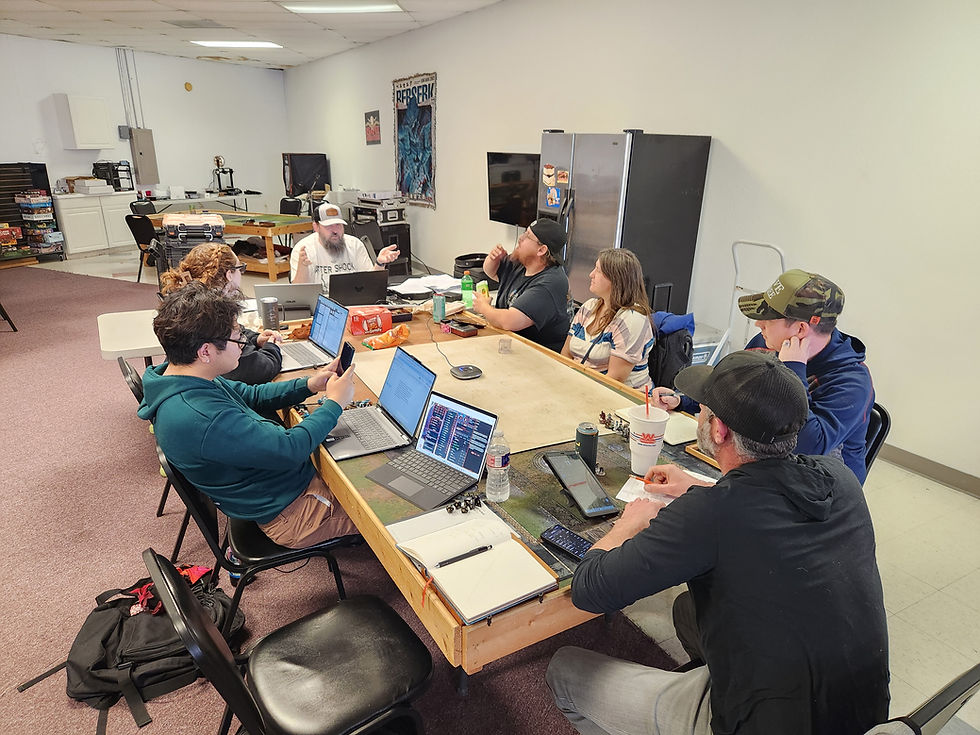
Organizations like Roll2Heal integrate TTRPGs to create supportive spaces, aligning with research on narrative therapy and group dynamics. This article reviews psychological evidence on TTRPGs for PTSD, incorporating themes from Tribe by Sebastian Junger (2016), which underscores the human need for tribal connections. By fostering camaraderie without positioning members as therapists, Roll2Heal exemplifies how TTRPGs can aid in stress alleviation and relationship building.
LITERATURE REVIEW
COMMUNITY AND BELONGING IN PTSD RECOVERY
Sebastian Junger's Tribe (2016) argues that modern society often lacks the interdependent bonds found in traditional tribal groups, leading to alienation. For veterans, the transition from platoon life—characterized by loyalty and shared purpose—to isolated civilian existence contributes significantly to PTSD symptoms. Junger posits that what is labeled as PTSD may stem more from this loss of closeness than from combat trauma alone, with studies showing that only a fraction of military personnel engage in direct combat yet many report distress upon return. Healing occurs best in tight-knit communities where individuals feel competent and connected, a concept echoed in Roll2Heal's approach to using TTRPGs for camaraderie.
Research supports this, indicating that group activities rebuild these bonds. For instance, a 2025 American Psychological Association review found that therapeutically applied role-playing games (TA-RPGs) enhance coping skills for trauma by promoting mindfulness and self-exploration. Similarly, a Brigham Young University study reported that after eight TTRPG sessions, 70% of participants showed improvements in social anxiety and emotional regulation.
TTRPGS AS TOOLS FOR NARRATIVE PROCESSING AND SOCIAL ENGAGEMENT
Psychological studies highlight TTRPGs' potential in addressing PTSD through narrative and interaction. A pilot evaluation at a VA medical center demonstrated that TA-RPG groups foster social connection among veterans, reducing feelings of loneliness via collaborative storytelling. Participants engaged in immersive scenarios that allowed safe exploration of emotions, leading to preliminary improvements in group cohesion.
Further, a 2025 clinical study revealed that 69% of young adults experienced significant PTSD symptom reductions through game-based narratives, which help process triggers in a controlled environment. Programs like Roll for Growth at the Minneapolis VA have shown reductions in depression, aggression, and anxiety after 12 weeks of gameplay. These findings align with Junger's (2016) emphasis on shared purpose, as TTRPGs simulate tribal dynamics where players rely on one another.
For first responders and healthcare professionals, similar benefits emerge. TTRPGs provide outlets for stress relief, with research from SUNY New Paltz noting their role in building empathy and reducing isolation through storytelling. A proposal at the VA Puget Sound Health Care System suggests using TTRPGs to treat PTSD by leveraging existing military role-playing training for therapeutic ends.
SAFETY TOOLS IN TTRPG COMMUNITIES
To ensure supportive environments, safety tools are essential. Roll2Heal employs the Deck of Player Safety, a card-based system allowing anonymous indication of discomfort topics, facilitating safe gameplay without extensive discussions. This tool supports the community's focus on positive experiences, emphasizing strengths and hopes in character creation rather than reliving traumas.
DISCUSSION
The reviewed literature underscores TTRPGs' role in PTSD support by recreating the tribal bonds described in Tribe (Junger, 2016). For veterans, first responders, and healthcare professionals, these games offer recreational pathways to social engagement and stress alleviation, as seen in VA initiatives and studies showing emotional improvements. Roll2Heal exemplifies this by providing a non-therapeutic community where TTRPGs build relationships, aligning with research on narrative therapy's benefits.
Future research could explore long-term outcomes, but current evidence supports TTRPGs as accessible tools for fostering resilience. Individuals interested in such communities are encouraged to join Roll2Heal at https://discord.gg/q7HAsxb4Rt for supportive gaming sessions.
REFERENCES
American Psychological Association. (2025). Improving treatment with role-playing games. https://www.apa.org/monitor/2025/04-05/role-playing-games-therapy
Battles, A. R. (2025). A pilot evaluation of a therapeutically applied tabletop role-playing game group therapy among veterans. Journal of Psychotherapy Integration. https://battlerobincounseling.com/wp-content/uploads/2025/04/battles-2025_a-pilot-evaluation-of-a-therapeutically-applied-tabletop-role-playing-game-group-therapy-among-veterans.pdf
Caldwell, I. (2024). The therapeutic possibilities of tabletop roleplaying games. Helena College. http://www.helenacollege.edu/library/docs/the-therapeutic-possibilities-of-tabletop-roleplaying-games-ian-caldwell.pdf
Deck of Player Safety. (n.d.). Deck of Player Safety. https://www.deckofplayersafety.com/
Junger, S. (2016). Tribe: On homecoming and belonging. Twelve.
Roll2Heal. (2025). Blog posts. https://roll2heal.org/blog
Roll2Heal. (2025). Empowering heroes: PTSD awareness through tabletop role-playing games with Roll2Heal. https://www.roll2heal.org/post/empowering-heroes-ptsd-awareness-through-tabletop-role-playing-games-with-roll2heal
Uniformed Services University. (2025). Staff perspective: Helping clients slay their dragons through therapeutically applied role-playing games. https://deploymentpsych.org/blog/staff-perspective-helping-clients-slay-their-dragons-through-therapeutically-applied-role


