Scholastic Implementations of Tabletop RPGs: Educational Benefits and Ties to Therapeutic Community Building

INTRODUCTION
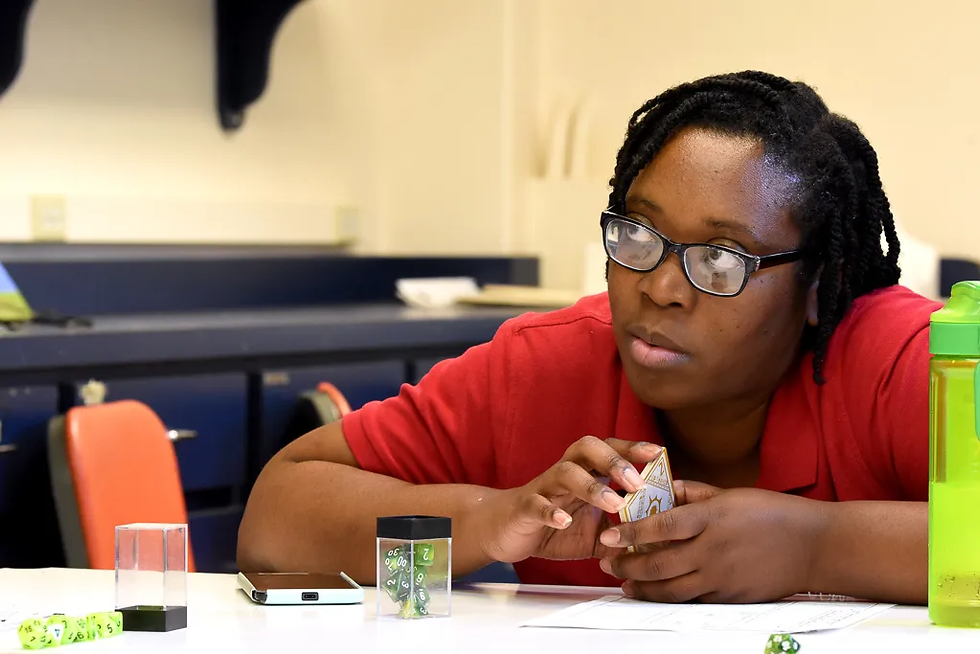
Tabletop role-playing games (TTRPGs), such as Dungeons & Dragons, have evolved from niche hobbies into versatile tools for education and personal development. Scholastic implementations refer to the integration of these games into school settings to enhance learning outcomes, social skills, and emotional resilience among students. This approach leverages the immersive storytelling and collaborative nature of TTRPGs to make education more engaging. Beyond classrooms, similar principles apply to therapeutic communities, where games foster connections and stress relief. Organizations like Roll2Heal exemplify this by creating supportive spaces for veterans, first responders, and healthcare professionals, drawing parallels to educational uses in building lasting relationships.

THE EDUCATIONAL BENEFITS OF TTRPGS
In educational environments, TTRPGs promote a range of academic skills, including critical thinking, mathematics, and literacy. For instance, players often engage in problem-solving scenarios that require quick calculations or strategic planning, which can improve numerical proficiency without traditional drills. Teachers have successfully incorporated TTRPGs into curricula, such as using campaigns to explore historical topics like ancient civilizations, making lessons interactive and memorable. These games also encourage reading through rulebooks and narrative descriptions, boosting vocabulary and comprehension in a fun context.
Moreover, TTRPGs adapt well to various subjects, from science simulations to language arts. Educators note that the low-prep nature of many TTRPG activities allows for quick integration into classrooms, providing immediate engagement for students. By framing learning as an adventure, these implementations help students retain information longer and apply it creatively.
TTRPGS AND SOCIAL-EMOTIONAL LEARNING IN SCHOOLS
A key strength of scholastic TTRPG implementations lies in their support for social-emotional learning (SEL). Games like these build empathy as participants role-play diverse characters, fostering tolerance and understanding among peers. Research highlights how TTRPGs enhance group dynamics, communication, and conflict resolution, skills essential for school success and beyond. In libraries and after-school programs, TTRPG sessions create inclusive spaces where students practice collaboration within time-limited formats.
These benefits extend to overall well-being, with studies showing improvements in self-efficacy and emotional regulation through regular play. For educators seeking to implement TTRPGs, starting with simple scenarios tied to curriculum goals can yield significant gains in student motivation and interpersonal skills.
BUILDING COMMUNITY THROUGH PLAY: INSIGHTS FROM 'TRIBE'
The community-building aspect of TTRPGs aligns closely with ideas in Sebastian Junger's book "Tribe: On Homecoming and Belonging," which explores humanity's innate need for close-knit groups. Junger argues that modern society's isolation contributes to mental health challenges, particularly for those returning from high-stakes environments like combat, where shared adversity strengthens bonds. He observes that reintegration into fragmented communities often exacerbates issues like PTSD, emphasizing the value of solidarity in healing.
In scholastic settings, TTRPGs recreate this "tribe" dynamic by encouraging shared experiences and mutual support, mirroring how games help students form lasting connections. This ties directly to therapeutic applications, where simulated adventures provide a safe space to process emotions and rebuild social ties, much like the communal resilience Junger describes.
ROLL2HEAL'S APPROACH TO COMMUNITY BUILDING WITH TTRPGS
Roll2Heal extends the principles of scholastic TTRPG implementations into supportive environments for adults facing unique challenges. The organization provides veterans, first responders, and healthcare professionals with opportunities to engage in TTRPGs as recreational tools for social interaction and stress alleviation related to PTSD. Founded from personal experiences where gaming sessions offered relief during difficult times, Roll2Heal focuses on fostering camaraderie without positioning itself as a therapeutic service—members are not therapists, but facilitators of positive group experiences.
Recent studies supported by Roll2Heal highlight how TTRPGs boost social self-efficacy and mental well-being among participants, reinforcing the community's role in resilience. By drawing on educational models of collaborative play, Roll2Heal creates spaces where individuals can forge legends while mending souls, emphasizing recreation over formal treatment.
SAFETY TOOLS IN TTRPG SESSIONS
To ensure inclusive and comfortable experiences, Roll2Heal employs the Deck of Player Safety as its primary tool for establishing boundaries and promoting respectful play. This deck allows participants to communicate preferences upfront, creating a secure environment for all involved. Such practices, inspired by broader TTRPG communities, align with scholastic implementations where safety enhances learning and engagement.
JOIN THE ROLL2HEAL COMMUNITY
For those interested in exploring TTRPGs within a supportive network, Roll2Heal invites veterans, first responders, and healthcare professionals to connect. Join the Discord server at https://discord.gg/q7HAsxb4Rt to participate in sessions, share stories, and build connections.
CONCLUSION
Scholastic implementations of TTRPGs demonstrate the power of play in education, from academic enhancement to SEL development. These foundations extend meaningfully to organizations like Roll2Heal, where community building addresses real-world needs, echoing the tribal bonds discussed in Junger's work. By embracing TTRPGs, both educators and support groups can cultivate environments of growth and belonging.
Sources:
American Library Association. (n.d.). Using RPGs in education: Resources and gaming guides. https://www.ala.org/tools/programming/role-playing-games
Bowman, S. L. (2010). The functions of role-playing games: How participants create community, solve problems and explore identity. McFarland.
Gaggioli, A., Riva, G., Peters, D., & Calvo, R. A. (2019). Positive technology, computing, and design: Shaping a future in which technology promotes psychological well-being. In Emotions and affect in human factors and human-computer interaction (pp. 477–502). Academic Press. https://doi.org/10.1016/B978-0-12-801851-4.00018-6
Junger, S. (2016). Tribe: On homecoming and belonging. Twelve.