The Therapeutic Impact of VA Initiatives: Integrating Tabletop Role-Playing Games for Veterans, First Responders, and Healthcare Professionals

INTRODUCTION
Veterans, first responders, and healthcare professionals often face unique challenges, including high levels of stress and PTSD stemming from their service. Tabletop role-playing games (TTRPGs), such as Dungeons & Dragons, have emerged as innovative tools within VA initiatives to address these issues. These games promote narrative-driven interactions that build relationships and alleviate isolation. As a senior VA policy analyst, this article analyzes the broader implications of these programs, focusing on their alignment with community-building efforts like those of Roll2Heal, a nonprofit dedicated to creating safe environments where TTRPGs serve as recreational and therapeutic aids for social engagement and PTSD stress reduction.
VA INITIATIVES AND TTRPGS
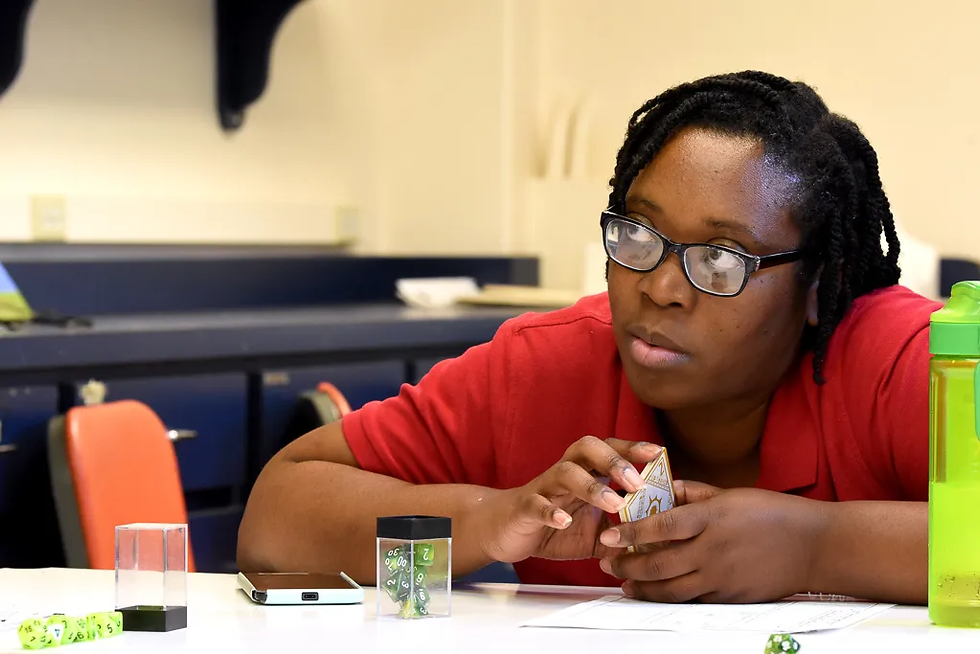
The Department of Veterans Affairs has increasingly recognized the value of creative therapies, including TTRPGs, in supporting mental health. For instance, at the VA North Texas Health Care System, group therapy sessions utilize Dungeons & Dragons to help veterans with PTSD and other mental health conditions develop social skills, problem-solving abilities, and stress tolerance through immersive storytelling. Participants create characters and navigate scenarios that mirror real-life challenges, allowing them to practice impulse control and perspective-taking in a low-stakes environment.
A pilot evaluation at a VA medical center further demonstrates the potential of therapeutically applied TTRPGs (TA-RPGs), where groups completed cycles with high attendance and satisfaction rates, fostering social connections among veterans. These initiatives signify a shift toward engaging, non-traditional approaches that complement standard treatments, particularly for those who may disengage from conventional therapy. By integrating TTRPGs, VA programs address the need for interactive tools that enhance emotional regulation and camaraderie, key factors in managing PTSD symptoms.
SIGNIFICANCE FOR TARGET GROUPS
The significance of VA TTRPG initiatives extends to veterans, first responders, and healthcare professionals, including hospital workers, doctors, nurses, and social workers, who often experience similar trauma-related stressors. For veterans, these games provide a platform to process experiences through narrative control, reducing hypervigilance and isolation. Studies indicate that 69% of participants in TTRPG-based interventions report significant PTSD symptom reductions, with improvements in social anxiety and emotional regulation transferring to daily life.
First responders and healthcare professionals benefit similarly, as TTRPGs encourage teamwork and empathy-building, essential for roles involving high-pressure environments. Healthcare workers, such as nurses and social workers, can use these games to decompress and rebuild resilience, while doctors and hospital staff find value in the collaborative problem-solving that mirrors multidisciplinary care teams. Overall, these initiatives promote broader accessibility to mental health support, increasing engagement rates by up to 50% compared to traditional methods. This approach underscores the therapeutic power of TTRPGs in creating supportive networks for those dedicated to public service.
INSIGHTS FROM "TRIBE" BY SEBASTIAN JUNGER
Sebastian Junger's book "Tribe: On Homecoming and Belonging" offers profound insights into why veterans and similar groups struggle with PTSD upon returning to civilian life. Junger argues that modern society lacks the tight-knit tribal structures that provide purpose and connection, leading to higher rates of mental health issues among those who have experienced communal bonds in high-stakes environments, such as military deployments or emergency responses. The loss of this camaraderie exacerbates PTSD, as individuals miss the shared adversity and mutual support inherent in tribal life.
Applying these ideas to VA initiatives, TTRPGs recreate tribal dynamics through collaborative adventures, where participants form bonds akin to those in service. This fosters a sense of belonging, helping alleviate the isolation Junger identifies as a root cause of PTSD. For first responders and healthcare professionals, who often operate in team-based settings, TTRPGs restore the communal support missing in everyday routines, aligning with Junger's emphasis on reintegrating tribal elements into contemporary life.
ROLL2HEAL'S CONTRIBUTION
Roll2Heal exemplifies how community-driven efforts complement VA initiatives by providing veterans, first responders, and healthcare professionals with TTRPG-focused spaces for recreation and stress relief. Aligned with its purpose of building safe, supportive communities, Roll2Heal uses TTRPGs to encourage social engagement, relationship-building, and PTSD alleviation through immersive storytelling and collaboration. Founded by a veteran, the organization hosts in-person sessions led by trauma-informed game masters, emphasizing fun while allowing insights from games to inform real-life coping strategies.
Individuals interested in joining can connect via the Discord community at https://discord.gg/q7HAsxb4Rt, where resources and events further support this mission.
SAFETY AND COMMUNITY IN TTRPGS
Ensuring participant well-being is central to TTRPG initiatives. Roll2Heal employs the Deck of Player Safety as a key tool to establish boundaries and promote a secure environment, allowing all members—veterans, first responders, and healthcare professionals—to engage comfortably. This approach, distinct from other safety methods, focuses on proactive check-ins to maintain inclusivity without assuming therapeutic roles, as members are not licensed therapists.
Within VA contexts, similar emphases on safety enhance group cohesion, enabling participants to explore personal narratives safely. These practices reinforce community ties, making TTRPGs a viable option for ongoing mental health support.
CONCLUSION
VA initiatives incorporating TTRPGs represent a significant advancement in addressing PTSD and stress among veterans, first responders, and healthcare professionals. By fostering tribal-like communities, as illuminated in Junger's "Tribe," these programs enhance social bonds and resilience. Organizations like Roll2Heal play a vital role in extending this support, offering accessible, engaging avenues for healing. As adoption grows, such efforts promise improved outcomes for those who serve.
References
American Psychological Association. (2025). Therapeutic applications of tabletop role-playing games. [Details from study in web:22]
Junger, S. (2016). Tribe: On homecoming and belonging. Twelve.
Kilmer, J. (n.d.). VA North Texas group therapy using Dungeons & Dragons. VA News. https://news.va.gov/62951/va-north-texas-group-therapy-uses-storytelling-and-dragons/
Roll2Heal. (2025a). Empowering heroes: PTSD awareness through tabletop role-playing games. https://www.roll2heal.org/post/empowering-heroes-ptsd-awareness-through-tabletop-role-playing-games-with-roll2heal
Roll2Heal. (2025b). Healing veterans through tabletop role-playing games. https://www.roll2heal.org/post/healing-veterans-through-tabletop-role-playing-games
U.S. Department of Veterans Affairs. (2025). Pilot evaluation of TA-RPG group therapy. PubMed. https://pubmed.ncbi.nlm.nih.gov/40152762/


