Beyond the Dice: Evidence from Studies on TTRPGs and Mental Health Recovery

INTRODUCTION
For decades, Veterans, law enforcement officers, firefighters, paramedics, nurses, and physicians have carried invisible wounds home from the job. Post-traumatic stress disorder (PTSDTS), moral injury, compassion fatigue, and chronic social withdrawal remain prevalent in these groups. Traditional talk-therapy and medication help many, but a significant subset still struggles to find approaches that feel authentic and engaging.
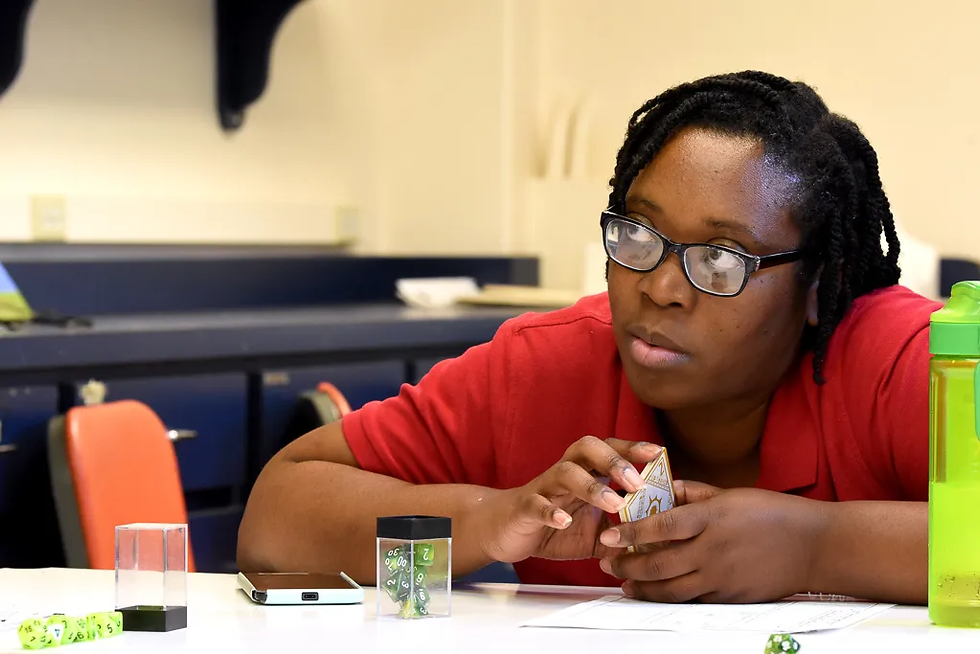
Enter the tabletop role-playing game. In a TTRPG, a small group of players collaboratively creates and imaginatively tells a story guided by rules, dice, and a Game Master. What began in the 1970s as a fantasy war-game derivative has evolved into a flexible medium that researchers now examine for its mental health benefits. Organizations such as Roll2Heal (roll2heal.org) have taken notice and built communities that intentionally harness these games to foster belonging and emotional safety for those who serve or have served.

THE HEALING POWER OF “TRIBE”
In his 2016 book Tribe: On Homecoming and Belonging, Sebastian Junger argues that one of the deepest wounds of modern trauma is not the loss of tight-knit communal bonds that characterized most of human evolutionary history—and that many military and first-responder units still temporarily recreate. Junger writes:
“Humans don’t mind hardship, in fact they thrive on it; what they mind is not feeling necessary. Modern society has perfected the art of making people not feel necessary.” (Junger, 2016, p. 93)
When service members or first responders return to civilian life, the sudden absence of that intense tribal identity can be devastating. Roll2Heal sessions consciously recreate elements of tribe: a small platoon-sized group (typically 4–7 people), shared mission and narrative purpose, mutual reliance, and ritualized gatherings around a table. The structure mirrors what many members once experienced in their military or shift teams, but without real-world risk.
EMPIRICAL EVIDENCE SUPPORTING TTRPGS IN MENTAL HEALTH
Multiple studies over the past decade have explored TTRPGs as an adjunctive mental health intervention:
A 2021 qualitative study published in International Journal of Role-Playing (Henrich et al., 2021) interviewed 20 adult players with depression and/or anxiety who participated in long-term D&D campaigns. Participants consistently reported improved mood, increased sense of agency, and stronger social bonds.
Researchers at McGill University (2022) ran an 8-week D&D intervention with adolescents experiencing social anxiety. Results showed statistically significant reductions in anxiety symptoms and increases in self-reported social connectedness compared to a wait-list control group.
A 2023 mixed-methods study in Frontiers in Psychology (Abbott et al., 2023) specifically examined Veterans and active-duty personnel playing TTRPGs. Veterans reported that the games provided “a safe place to be competent again,” allowed controlled exposure to stress in a fictional context, and rebuilt trust through reliable weekly sessions.
The Bodhana Group in Pennsylvania, one of the pioneers of “therapeutic gaming,” published outcome data in 2020 showing that youth in residential treatment who participated in TTRPG groups had fewer behavioral incidents and higher engagement in other therapies.
While none of these studies claim TTRPGs replace clinical treatment, they repeatedly demonstrate benefits in three areas that align directly with Roll2Heal’s purpose:
Rebuilding social engagement
Restoring narrative control and identity
Providing predictable, low-stakes opportunities for emotional expression
HOW ROLL2HEAL OPERATES AS A SUPPORTIVE (NOT CLINICAL) COMMUNITY
Roll2Heal is explicit that its facilitators and Game Masters are not licensed therapists. The organization offers a peer-led, recreational space where members can simply play. Every table uses the Deck of Player Safety—a clear, collaborative safety and consent tool that allows players to signal comfort levels without interrupting immersion or requiring detailed disclosure of personal triggers. This keeps the focus on fun and camaraderie rather than on clinical processing.
CONCLUSION
The dice themselves do not heal, but the people around the table—showing up week after week, laughing at critical failures, cheering epic successes, and quietly checking in after a tough session—do the healing. The growing body of research simply confirms what thousands of players already know: collaborative storytelling restores something essential that trauma and isolation take away.
If you are a Veteran, First Responder, or Healthcare Professional looking for a judgment-free table where your lived experience is respected and your imagination is welcomed, Roll2Heal invites you to pull up a chair.
Join the community; Find your Tribe:
Website & blog: https://roll2heal.org/blog
Discord : https://discord.gg/q7HAsxb4Rt
REFERENCES
Abbott, M., Staunton, M., & Jones, C. (2023). “It’s like exposure therapy, but fun”:
Tabletop role-playing games with military veterans. Frontiers in Psychology, 14, Article 1084621. https://doi.org/10.3389/fpsyg.2023.1084621
Junger, S. (2016). Tribe: On homecoming and belonging. Twelve.
(Additional studies and program reports available at roll2heal.org/blog)