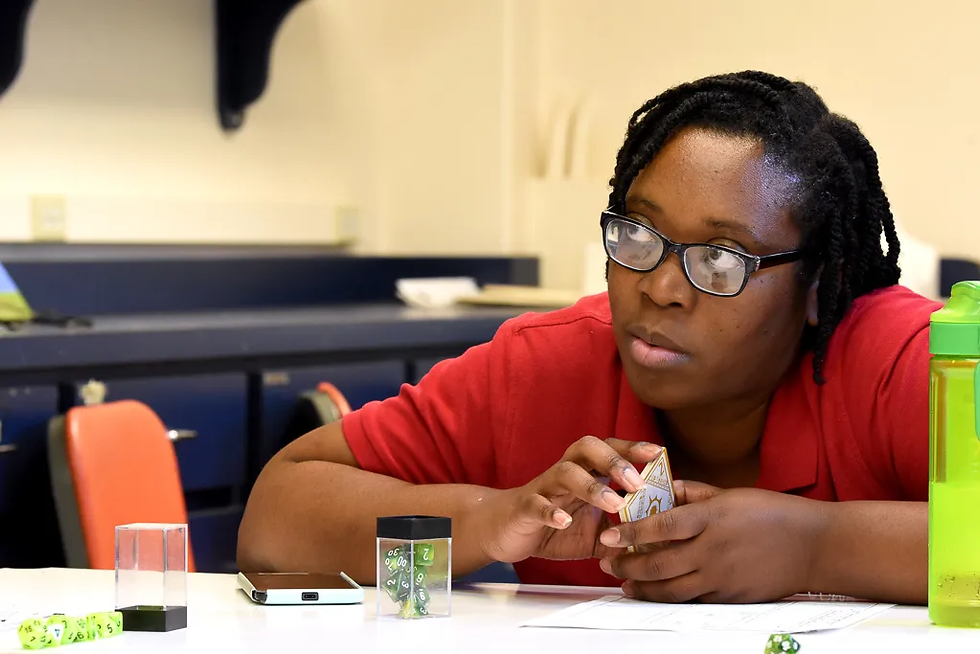
Gaming Through Grief: TTRPGs as a Tool for Processing Loss in High-Stress Professions

INTRODUCTION
People in high-stress professions routinely witness death, critical injury, and human suffering. Veterans lose battle buddies, firefighters lose civilians and colleagues, paramedics pronounce patients in the field, and nurses hold the hands of those who do not recover. Unlike civilian bereavement, which often follows a single traumatic event, these professions experience “cumulative grief” or “compassion fatigue” across years of service. Traditional talk-based support, while valuable, can feel clinical or insufficient for individuals accustomed to action-oriented cultures.
Sebastian Junger (2016) argues in Tribe: On Homecoming and Belonging that modern society has largely lost the small, tight-knit groups that once helped humans process shared hardship. After war or disaster, he observes, people often feel more “alive” in the platoon or firehouse than they do back home because those groups provide honest emotional connection and a shared narrative for suffering. Roll2Heal seeks to recreate a modern version of that tribal closeness—not on the battlefield or in the station, but around a gaming table.

THE THERAPEUTIC POTENTIAL OF TTRPGs
Research on tabletop RPGs increasingly documents benefits that align with the needs of high-stress professions:
Narrative externalization allows players to explore grief, guilt, or anger through a character rather than directly recounting real events (Hughes et al., 2021).
Collaborative storytelling restores agency; players who felt powerless during real-loss incidents can now influence outcomes in the fiction.
Regular sessions rebuild the “platoon-level” bonding Junger describes, countering the isolation that often follows retirement or shift changes.
Importantly, Roll2Heal facilitators are peers—veterans, firefighters, medics, and nurses themselves—not licensed therapists. The community explicitly positions TTRPGs as a recreational and social-support activity, not clinical intervention.
ROLL2HEAL’S APPROACH
Roll2Heal welcomes Veterans, First Responders, and Healthcare Professionals to free in-person TTRPG sessions. Games are selected or homebrewed to feel welcoming rather than triggering (fantasy settings remain the most popular). Every table begins with the Deck of Player Safety—a simple, military-inspired tool that lets participants anonymously indicate comfort levels with specific content and request immediate pauses or rewinds if needed.
Players frequently report that creating a character who has also “lost a squad” or “failed to save someone” gives them language for feelings they had buried.
GRIEF AROUND THE TABLE: THREE COMMON PATTERNS
Veteran and first-responder players at Roll2Heal often experience:
Survivor Guilt Transference – A character sacrifices themselves so the party can live, allowing the player to voice “why them and not me?” in a safe fictional context.
Memorialization – Parties hold in-game funerals, build cairns, or plant trees for fallen comrades—mirroring real-world battlefield crosses or station memorials.
Reintegration Narratives – Retired or medically separated characters attempt to find purpose in civilian life, paralleling the player’s own transition struggles.
Because the outcomes are co-created, players can explore both tragic and redemptive endings—something real life rarely offers
WHY THIS WORKS FOR HIGH-STRESS CULTURES
Many Veterans and first responders resist traditional mental-health settings because they fear being labeled, losing security clearances, or simply “talking about feelings” in a sterile office. A gaming table sidesteps those barriers:
It feels like recreation, not treatment.
Humor and heroism coexist naturally with heavier moments.
The structure (initiative order, dice rolls, character sheets) appeals to procedure-minded professions.
Peers who “get it” run the game—no need to educate a civilian therapist about the job.
As Junger (2016) notes, “The most alarming rhetoric [about PTSD] comes from people who have not experienced the events that caused it.” At Roll2Heal tables, everyone has.
CONCLUSION
Tabletop role-playing games will never replace professional mental-health care when it is needed, but they can serve as a powerful upstream intervention—rebuilding the tribe, restoring narrative control, and giving grief a place to be spoken aloud. For Veterans, First Responders, and Healthcare Professionals carrying years of unspoken loss, a set of dice and a circle of comrades can become sacred space.
If you serve or have served in any of these roles—or love someone who does—consider joining the Roll2Heal community. Games are always free, judgment is never present, and the table is waiting.
Discord: https://discord.gg/q7HAsxb4Rt
Website & Blog: https://roll2heal.org/blog
REFERENCES
Junger, S. (2016). Tribe: On homecoming and belonging. Twelve.
Hughes, J., Lacy, M., & White, W. (2021). Therapeutic tabletop role-playing games: A critical review. International Journal of Role-Playing, 11, 34–52.
Roll2Heal. (n.d.). [Blog]. https://roll2heal.org/blog