Improv in Action: “Yes, And…” Exercises for Burned-Out Healthcare Teams

INTRODUCTION
In his book Tribe: On Homecoming and Belonging, Sebastian Junger (2016) observes that humans are wired for tight-knit communal bonds, especially under stress. Modern society, however, often isolates high-stakes professions such as nursing, emergency medicine, and military service from the very tribal cohesion that once protected mental health. The result is record-level burnout and PTSD symptoms across these groups.

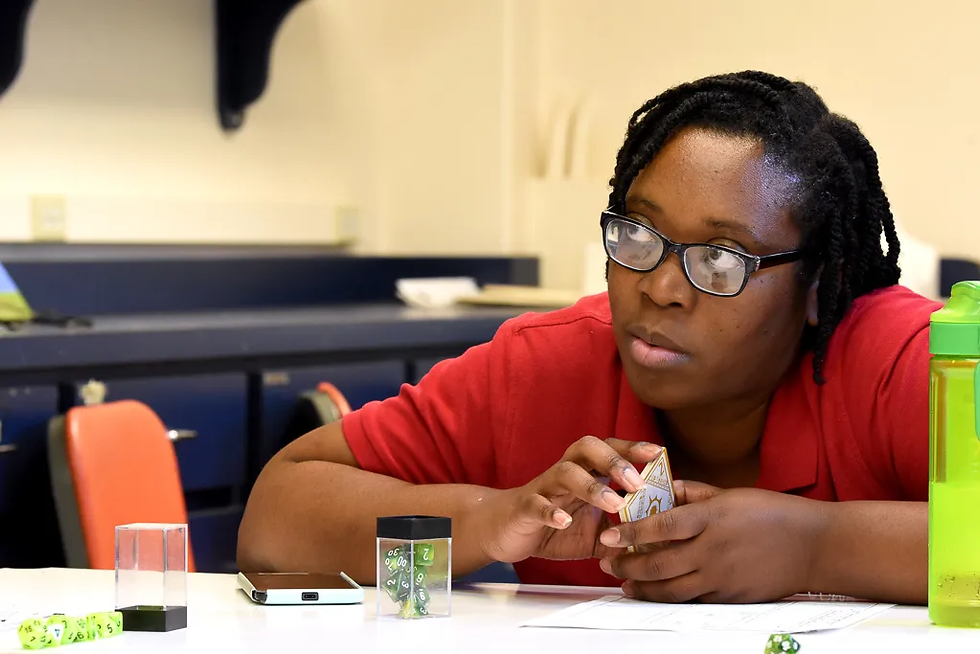
Roll2Heal re-creates that protective “tribe” using tabletop role-playing games as the campfire around which veterans, first responders, and healthcare workers can reconnect. While TTRPGs are the primary activity, short improvisational theater exercises—borrowed from improv comedy—serve as perfect warm-ups that reinforce the same psychological safety and collaborative spirit that make Roll2Heal sessions healing.
The single most powerful improv concept for burned-out teams is simple: “Yes, And…”
WHAT “YES, AND…” REALLY MEANS
In improv, performers must accept whatever their partner offers (“Yes”) and then build on it (“And”). Rejecting or blocking an offer (“No, but…”) kills the scene and the same way constant correction or dismissal kills psychological safety in a hospital unit or firehouse.
Healthcare culture, unfortunately, is filled with reflexive “No, but…” responses born of liability fears, hierarchy, and exhaustion. “Yes, And…” flips the script and reminds everyone—briefly and playfully—that collaboration feels good.
FIVE SUGGESTED “YES, AND…” EXERCISES FOR HEALTHCARE TEAMS
1. YES, AND STORY CIRCLE (5–7 MINUTES)
Participants stand or sit in a circle.
The facilitator starts with one sentence of an absurd medical or fantasy story (e.g., “Last night the ambulance turned into a dragon…”).
The next person must begin their addition with “Yes, and…” and add one new sentence.
Continue around the circle until everyone has contributed at least once. Benefit: Rapid co-creation re-trains the brain to listen actively and build rather than critique.
2. ONE-WORD-AT-A-TIME PATIENT HANDOFF (4–6 MINUTES)
Two volunteers stand in front of the group.
They must deliver a complete (and ridiculous) patient handoff report, but only one word at a time, alternating turns.
The rest of the group simply witnesses and laughs. Benefit: Forces extreme listening and acceptance—skills that translate directly to real shift handoffs.
3. YES, AND MIRROR (8–10 MINUTES)
Pair up. One person is the leader, the other the mirror.
The leader makes slow movements; mirror copies exactly.
After 90 seconds, switch roles without talking.
Then try it with both people leading at 50/50 (true “Yes, And” in motion). Benefit: Non-verbal attunement and shared control—perfect antidote to hierarchical burnout.
4. FORTUNATELY/UNFORTUNATELY (6–8 MINUTES)
Circle game. First person offers an unfortunate event (“Unfortunately, the EMR crashed during a code”).
The next person must counter with “Fortunately…” and something positive or absurd that comes from it.
Alternate Fortunately/Unfortunately around the room. Benefit: Trains cognitive flexibility and reframing—evidence-based tools against rumination and helplessness.
5. YES, AND COMPLIMENT WAVE (3–5 MINUTES)
Everyone stands in a circle.
The first person turns to the person on their right and gives a sincere (or playfully exaggerated) compliment that starts with “Yes, and you are amazing at…”
The receiver simply says “Thank you,” then turns and pays it forward. Benefit: Immediate hit of oxytocin and belonging—Junger’s “tribe” in action.
TYING IT BACK TO TABLETOP PLAY
After these warm-ups, players sit down to a session with softer defenses and sharper listening skills. The same “Yes, And” mindset that keeps an improv scene alive keeps a collaborative campaign thriving. Everyone’s ideas get built upon rather than shot down, creating the exact psychological safety that research shows reduces PTSD symptoms and burnout.
We use only the Deck of Player Safety so that boundaries are clear and consistent, yet the table remains a place of enthusiastic co-creation.
CONCLUSION
You do not need a full improv class to bring “Yes, And…” into your life. Five or ten minutes of purposeful play before a shift, a game night, or a staff meeting can remind an exhausted team what it feels like to be on the same side again.
As Junger (2016) wrote, “Humans don’t mind hardship, in fact they thrive on it; what they mind is not feeling necessary.” “Yes, And…” exercises are a fast, free way to make every person in the room feel necessary—exactly what Roll2Heal tries to do every week around the in-person tabletop.
Ready for a supportive community? Join our Discord: https://discord.gg/q7HAsxb4Rt
REFERENCES
Junger, S. (2016). Tribe: On homecoming and belonging. Twelve.
Roll2Heal. (2025). Blog archives. https://roll2heal.org/blog
(Note: Roll2Heal facilitators and members are peers, not licensed therapists. We provide community and recreational support only.)