First Responder News: Recapping the 2025 Iowa First Responder Wellness Conference – Spotlight on Wellness Tools and Innovative Peer Support Through Tabletop Role-Playing Games
- Crystal

- Sep 30, 2025
- 3 min read
Updated: Jan 26
INTRODUCTION
First responders—firefighters, law enforcement officers, EMS personnel, and dispatchers—face unparalleled occupational stressors that elevate risks for mental health challenges, including post-traumatic stress disorder (PTSD) and burnout. The 2025 Iowa First Responder Wellness Conference, organized by the Peer Support Foundation, convened over 200 professionals at the Hilton Garden Inn in West Des Moines, Iowa, from September 17-19 to equip attendees with actionable strategies for holistic well-being. Featuring keynote speaker Ret. Sgt. Kevin Briggs, known as the "Guardian of the Golden Gate Bridge" for his crisis intervention expertise, the event blended educational tracks, hands-on experiences, and community-building activities. This recap synthesizes the conference's core focus on wellness tools while proposing TTRPGs—collaborative storytelling games like Dungeons & Dragons—as a novel peer support mechanism, exemplified by the organization Roll2Heal.

CONFERENCE RECAP: PRIORITIZING WELLNESS TOOLS
The conference adopted a dual-track format: Track A for broad wellness topics and Track B for foundational peer support training, ensuring accessibility for both novices and seasoned supporters. Attendees, including significant others, benefited from low-barrier entry points like $199 registration fees and scholarships, underscoring the event's commitment to inclusivity.
Central to the agenda were evidence-based wellness tools tailored to first responders' realities. Sessions addressed multifaceted stressors through practical interventions:
Physical and Mindfulness Practices: Michael Ziegwart's yoga and wellness workshop provided breathing techniques and mobility exercises to mitigate chronic tension from shift work. Complementary offerings included free on-site massages and eye movement desensitization and reprocessing (EMDR) sessions, demonstrating immediate somatic relief for trauma symptoms.
Financial and Relational Resilience: Joel Hall's financial wellness seminar offered budgeting frameworks to alleviate economic pressures exacerbated by irregular hours, while Aaron Groves' "Better Marriage Makes Better Heroes" explored communication strategies for family dynamics strained by high-risk careers.
Trauma Recovery Pathways: Presenters like Jeremy Sprague on post-traumatic growth and Matt Jenatscheck on sobriety journeys from on-the-job PTSD highlighted narrative reframing and vice-avoidance tactics, such as Amber Nuehring's guidance on steering clear of maladaptive coping mechanisms.
These tools aligned with broader trends in first responder health initiatives, emphasizing proactive, agency-led interventions over reactive crisis management. A social evening at Smash Park further reinforced communal bonds, blending recreation with subtle peer debriefing opportunities.
INTEGRATING TTRPGS: A PLAYFUL APPROACH TO PEER SUPPORT
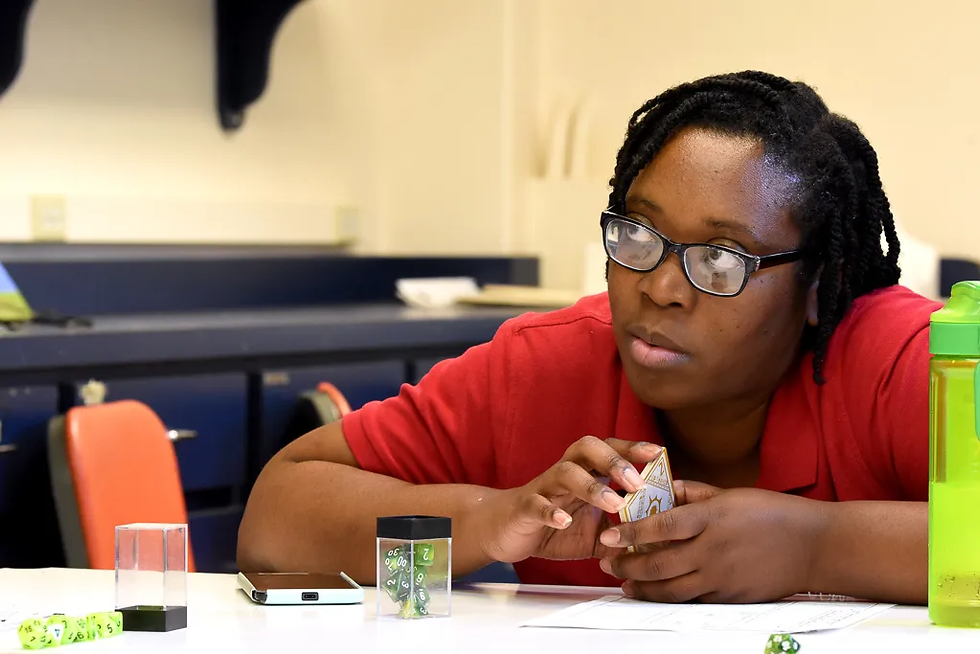
While traditional peer support—such as Track B's training on active listening and boundary-setting—remains foundational, the conference indirectly spotlighted innovative, low-stakes modalities for sustained emotional processing. Enter tabletop role-playing games (TTRPGs): structured yet improvisational activities where participants co-create stories in fictional worlds. Unlike conventional therapy, TTRPGs leverage imagination and collaboration to normalize vulnerability, allowing first responders to externalize traumas through characters rather than personal disclosure.
Research supports TTRPGs' efficacy in building resilience; studies indicate they enhance social capital and reduce isolation by simulating high-trust team dynamics akin to emergency response scenarios. For first responders, this translates to "rehearsing" emotional regulation in a consequence-free environment, fostering post-shift decompression. The conference's emphasis on creative outlets, like Crisis K9 demonstrations for animal-assisted therapy, sets a precedent for gamified support—extending wellness tools beyond clinical settings into engaging, repeatable formats.
SPOTLIGHT ON ROLL2HEAL: GAMING FOR HEALING
A prime example is Roll2Heal, a nonprofit harnessing TTRPGs to support veterans, first responders, and healthcare professionals grappling with PTSD. Founded on a veteran's serendipitous discovery of stress relief during a Dungeons & Dragons session, the organization creates safe, virtual and in-person communities where gaming sessions double as peer circles. One testimonial recounts a participant crediting game anticipation with averting a suicidal crisis, illustrating TTRPGs' role in instilling purpose and connection.
Roll2Heal's mission prioritizes accessibility: free Discord servers, YouTube streams, and social media hubs (e.g., Instagram @roll2heal) democratize entry, mirroring the conference's scholarship model. For first responders, programs emphasize relational healing—players as "allies" in shared narratives—aligning with evidence that narrative play mitigates hypervigilance. By integrating Roll2Heal-inspired elements, future conferences could host demo sessions, blending TTRPGs with existing tools like EMDR for hybrid wellness experiences. Resources at www.roll2heal.org and facebook.com/Roll2Heal offer immediate onboarding, from beginner guides to facilitated groups.
CONCLUSION
The 2025 Iowa First Responder Wellness Conference reaffirmed that wellness is not a luxury but a professional imperative, arming attendees with yoga, financial planning, and trauma therapies to navigate their high-stakes worlds. By weaving in TTRPGs as a peer support pillar—championed by Roll2Heal—agencies can cultivate enduring resilience through joy-infused camaraderie. As first responder programs evolve, embracing such playful innovations promises not just survival, but thriving. Agencies are encouraged to pilot TTRPG integrations, tracking outcomes via tools like post-traumatic growth scales.
REFERENCES
Peer Support Foundation. (2025). 2025 Iowa First Responder Wellness Conference. https://www.peersupportfoundation.org/wellness-conference
Roll2Heal. (n.d.). Roll against PTSD. https://www.roll2heal.org/