HEALING THROUGH FAILURE: WHAT NAT 1s TEACH US ABOUT SELF-COMPASSION

INTRODUCTION
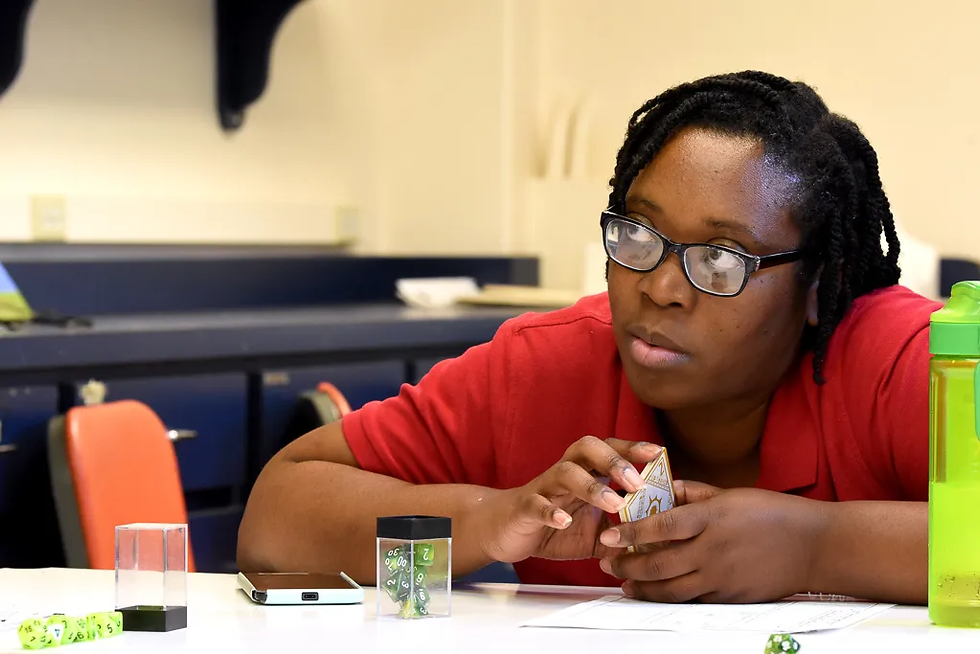
In the dice-driven world of tabletop role-playing games, few sounds strike simultaneous dread and laughter like the hollow clatter of a natural 1. A sword slips from a hero’s hand, a spell backfires spectacularly, or a stealthy rogue trips an alarm heard three kingdoms away. For many players—especially veterans, first responders, and healthcare professionals who carry real-world experiences of high-stakes failure—these moments hit differently. Yet within the supportive circles of Roll2Heal, a natural 1 is never just a failure; it is an invitation to heal.
Roll2Heal provides veterans, first responders, and healthcare professionals with a safe and supportive community where TTRPGs serve as therapeutic and recreational tools to foster social engagement, build relationships, and alleviate stress related to post-traumatic stress disorder (PTSD). While Roll2Heal facilitators are not licensed therapists, the structured play and intentional use of the Deck of Player Safety create an environment where emotional safety and mutual support flourish.

THE PSYCHOLOGICAL WEIGHT OF FAILURE
Real life rarely offers a “reroll.” A missed call at a fire scene, a diagnosis delivered too late, or a tactical decision gone wrong in combat—these moments can linger for years, fueling shame, hypervigilance, and isolation. Sebastian Junger (2016) observes in Tribe: On Homecoming and Belonging that modern society has largely removed the communal processing of hardship that once bound small bands together after disaster or battle. Without that shared narrative, individuals internalize failure as personal defect rather than collective experience.
TTRPGs, by contrast, reintroduce communal storytelling. When a character rolls a natural 1 and the table erupts in supportive laughter rather than judgment, players rehearse a different script: “This happened, we witnessed it together, and we’re still here for each other.”
NAT 1s AS SAFE PRACTICE FOR SELF-COMPASSION
Self-compassion—treating oneself with the same kindness one would offer a close friend—does not come naturally to many who have served in high-stress professions. Research consistently shows that self-criticism correlates with higher rates of PTSD, depression, and burnout among veterans and first responders. A natural 1, however, lowers the stakes dramatically. The consequences are fictional, the table is bound by the Deck of Player Safety, and the outcome is almost always funny rather than fatal.
In Roll2Heal sessions, players frequently report that their first audible “aww, it’s okay” after a crit fail is directed not at their character, but at themselves. The table models the response they struggle to give in daily life: gentle humor, immediate reassurance, and collaborative problem-solving. Over weeks and months, this muscle memory begins to transfer off the table.
BELONGING AND THE TRIBE AROUND THE TABLE
Junger (2016) argues that one of the deepest wounds of modern warfare and emergency service is the loss of tribe—the tight-knit group that shares risk and meaning. Roll2Heal consciously rebuilds that tribe, one campaign at a time. When a player rolls a 1 and the dungeon master narrates a spectacular (but harmless) pratfall, the laughter is communal. When another player immediately offers inspiration, advantage, or a creative retcon, the support is communal. The message is unmistakable: your worth is not tied to your performance.
Veterans who once measured themselves solely by mission success, paramedics who replay every lost patient, nurses who carry the weight of 80-hour weeks—all find, sometimes to their surprise, that the table still has a seat for them even when they “fail.”
CONCLUSION
A natural 1 is never the end of the story. In the hands of a compassionate table, it becomes a beginning: the start of a laugh, a story, a reminder that setbacks do not define us. For the veterans, first responders, and healthcare professionals who gather under the Roll2Heal banner, these small moments of scripted failure are quietly rewriting larger narratives of shame and isolation into ones of belonging and grace.
If you are a veteran, first responder, or healthcare professional looking for a table where failure is met with understanding rather than judgment, Roll2Heal welcomes you. Visit roll2heal.org/blog for reflections, or join the community today at https://discord.gg/q7HAsxb4Rt.
References
Cox, R. C., et al. (2021). Self-compassion and PTSD symptom severity in veterans. Psychological Trauma: Theory, Research, Practice, and Policy, 13(5), 543–551.
Held, P., & Owens, G. P. (2023). Self-criticism and posttraumatic stress disorder symptoms in first responders. Journal of Traumatic Stress, 36(1), 112–121.
Junger, S. (2016). Tribe: On homecoming and belonging. Twelve.
(Note: Roll2Heal facilitators are peers and fellow gamers, not licensed mental health professionals. The Deck of Player Safety is used to maintain emotional comfort and consent at the table.)