Healthcare Workers Are Burning Out — Here’s How Fantasy Worlds Are Saving Them
- Crystal

- Nov 25, 2025
- 3 min read
Updated: Jan 26
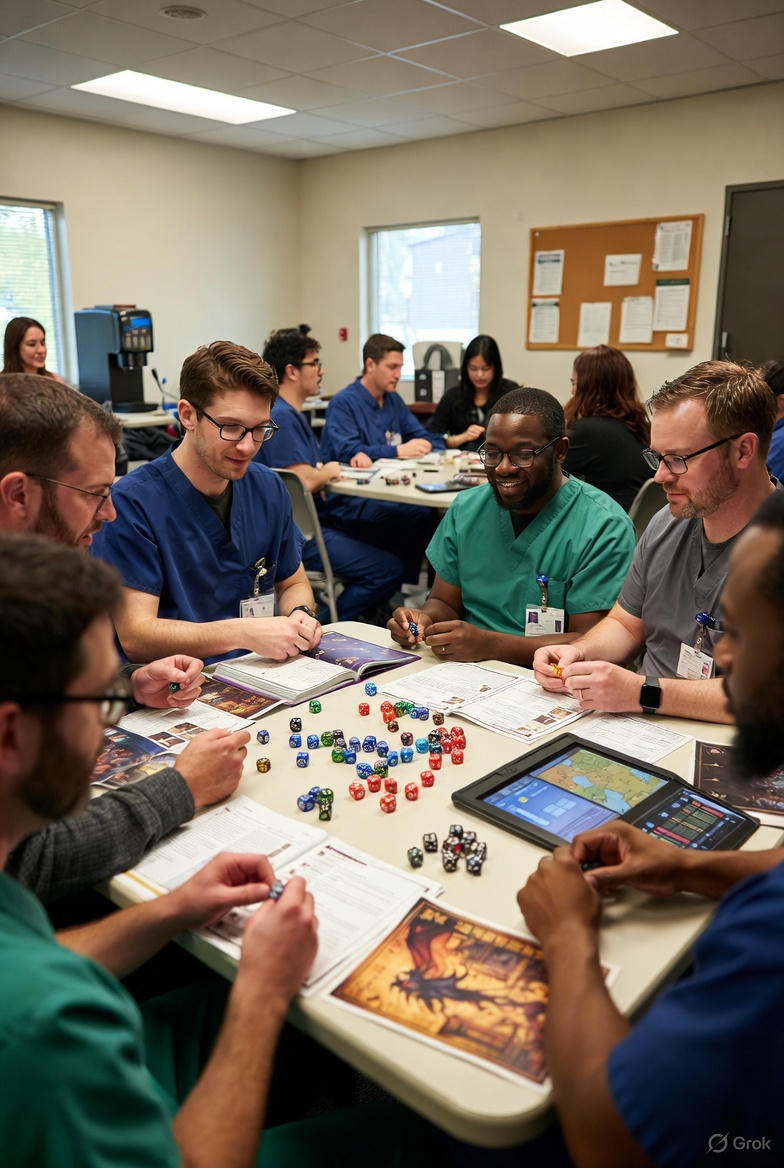
In hospitals and clinics worldwide, healthcare professionals confront relentless demands: long shifts, emotional trauma from patient suffering, and the lingering effects of the COVID-19 pandemic. These pressures have fueled widespread burnout, characterized by exhaustion, cynicism, and reduced efficacy. Recent data indicate that while burnout rates have slightly declined from pandemic highs, they remain alarmingly elevated. In 2024, approximately 48% of physicians reported at least one burnout symptom, with nurses facing rates as high as 62% in some surveys. Overall, nearly one-third of healthcare employees experience burnout indicators, contributing to high turnover and compromised patient care. Yet an unconventional remedy is gaining momentum: tabletop role-playing games (TTRPGs), such as Dungeons & Dragons (D&D). In these games, participants create characters, embark on collaborative quests in imaginary realms, and resolve challenges through storytelling and dice rolls. What began as recreational entertainment is now recognized for therapeutic potential, offering healthcare workers a structured escape to rebuild resilience, foster connections, and process stress.
The Persistent Crisis of Burnout in Healthcare
Burnout among healthcare workers predates the pandemic but intensified dramatically during it. Surveys from 2023–2025 show improvement—physician burnout dropped below 50% for the first time in years—but levels exceed pre-2020 baselines. Contributing factors include chronic understaffing, administrative burdens, and exposure to trauma. Nurses and frontline staff report exhaustion and detachment, with many considering leaving the profession. Addressing this requires innovative wellness strategies beyond traditional counseling or time off.
The Therapeutic Power of Tabletop Role-Playing Games
TTRPGs provide more than diversion; they facilitate psychological benefits supported by growing research. Players assume alternate identities in fantasy settings, enabling safe exploration of emotions, decisions, and relationships without real-world consequences.
Key advantages include:
Enhanced Social Connection: Collaborative gameplay combats isolation. Groups cooperate to overcome obstacles, building trust and camaraderie often absent in high-stress medical environments.
Stress Relief and Escapism: Immersing in epic narratives offers a mental break from clinical realities. Anticipation of sessions can serve as a motivational anchor during difficult periods.
Skill Development: Games promote problem-solving, creativity, empathy, and emotional regulation. Studies link TTRPG participation to reduced anxiety, improved social skills, and greater self-efficacy.
Trauma Processing: Structured rules and role-distancing allow indirect confrontation of experiences, similar to established therapies like psychodrama.
Scoping reviews of TTRPG interventions confirm benefits for mental health, including lower depression symptoms and stronger interpersonal abilities. Organizations like Game to Grow and Geek Therapeutics train professionals in "therapeutically applied RPGs," integrating games into clinical practice.
Organizations Leading the Way: Roll2Heal and Beyond Nonprofits are adapting TTRPGs specifically for high-risk groups, including healthcare workers.
Roll2Heal (roll2heal.org), a nonprofit organization, creates supportive communities for veterans, first responders, and healthcare professionals. Through TTRPG sessions the group uses fantasy adventures as tools for recreation and therapy. The organization's origins trace to veterans discovering stress relief in gameplay; one participant credited anticipation of sessions with preventing suicide. Roll2Heal emphasizes fostering relationships and alleviating PTSD-related stress, extending sessions to healthcare workers facing similar occupational hazards.
Similar initiatives exist globally. Therapists incorporate D&D into group therapy for trauma recovery, while programs target burnout through guided campaigns. Books like Tabletop Role-Playing Therapy by Megan Connell and Therapeutically Applied Role-Playing Games outline methods for clinicians to facilitate these sessions.
Real Impact: Stories from the Table
Anecdotal evidence abounds. Healthcare workers describe sessions as "life-saving respites," where slaying dragons metaphorically releases pent-up frustration. One nurse noted that role-playing assertive characters helped reclaim agency lost to bureaucratic demands. Research supports these experiences: participants in therapeutic TTRPG groups report heightened hope, universality (realizing others share struggles), and catharsis.
A Path Forward
As burnout persists into 2025, healthcare institutions should explore TTRPG programs alongside conventional support. Partnerships with organizations like Roll2Heal could integrate game nights into wellness initiatives. For individuals, joining local or online groups offers an accessible entry point—no prior experience required.
Fantasy worlds, once dismissed as mere escapism, are proving instrumental in healing real ones. By rolling dice and forging legends, exhausted healers rediscover joy, connection, and strength to continue their vital work.