Rolling Gratitude: A Post-Thanksgiving D&D Exercise to Process the Holiday

INTRODUCTION
Thanksgiving can be emotionally complicated for many in the military, emergency services, and healthcare communities. Large family gatherings, media portrayals of “perfect” holidays, and the contrast between civilian and service-related life can surface feelings of disconnection or survivor guilt. Sebastian Junger (2016) observes in Tribe that modern society often lacks the tight-knit communal bonds humans evolved with, and that the loss of “tribe” is felt acutely by those who have served in high-stakes environments. Roll2Heal believes that gathering around an in-person table to roll dice and tell stories can begin to rebuild that sense of tribe, one game at a time.
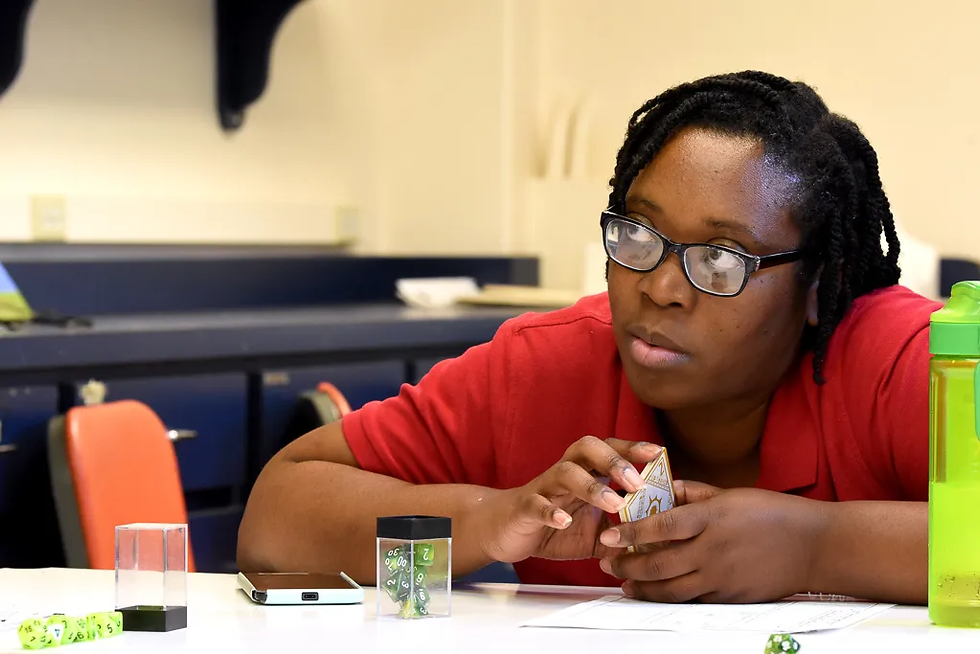
“Rolling Gratitude” is a 45–60 minute, system-light activity that can be run the weekend after Thanksgiving (or any time the holiday blues hit). It requires almost no preparation and works both online and in person.

PURPOSE OF THE EXERCISE
The exercise has three goals that directly support Roll2Heal’s mission:
Provide a structured, low-pressure way for participants to name genuine moments of gratitude without forced positivity.
Reinforce peer connection and the feeling of “I’m not the only one who felt this way about the holiday.”
Offer a recreational TTRPG experience that lowers stress and reminds players they belong to a tribe that understands them.
MATERIALS NEEDED
Discord voice or a real-life table
One d20 per player (physical or digital)
The Deck of Player Safety (our community’s only safety tool) placed visibly
Optional: a shared Google Doc or virtual whiteboard titled “Our Tribe’s Gratitude Fire”
THE EXERCISE: ROLLING GRATITUDE (STEP-BY-STEP)
SESSION ZERO (5 MINUTES)
The facilitator reminds everyone:
“We are peers, not therapists. Tonight is about sharing stories and rolling some dice together. The Deck of Player Safety is on the table; use it anytime something feels off. No one owes anyone a story they’re not ready to tell.”
THE GRATITUDE FIRE (10 MINUTES)
Everyone goes around once and shares one thing, however small, they felt grateful for over the holiday weekend. It can be serious (“I’m grateful my squad-mate texted me”) or silly (“I’m grateful for pie”). No commentary yet; just listening.
ROLLING THE STORY (25–35 MINUTES)
The facilitator says:
“Imagine we’re all sitting around a campfire the weekend after Thanksgiving in whatever fantasy, modern, or sci-fi world you want. The fire is warm, the stars are out, and we’re passing a single d20 around the circle.”
Each player, in turn:
Roll the d20 in the open.
Interprets their roll as a prompt about their holiday experience (using the table below or making it up).
Tells a short, true 1–2 minute story from their real Thanksgiving weekend inspired by the prompt.
Ends their story by naming one thing they’re taking forward into the next year (a hope, a boundary, a tradition, etc.).
Sample d20 Prompt Table (players may reroll or choose if preferred):
1–4 Something unexpectedly good happened
5–8 Something hard or awkward happened
9–12 A moment of connection with another person
13–16 A sensory memory (food, smell, sound)
17–19 A moment you felt proud of yourself or someone else
20 Wild card; tell any true holiday moment you want
The only rule: keep it real, keep it brief, keep it kind. Listeners simply witness; no advice unless asked.
CLOSING THE FIRE (10 MINUTES)
Going around one final time, each person adds one “log” to the shared Gratitude Fire (typed or spoken): a single sentence of appreciation for the group (“I’m adding the log that I got to hear your voices tonight”). The facilitator reads the full list aloud so everyone hears the collective gratitude.
WHY THIS WORKS FOR OUR COMMUNITY
Junger (2016) writes that humans heal best in small groups where vulnerability is met with acceptance rather than judgment. Rolling a d20 adds just enough game structure to lower defenses; many Veterans and First Responders report that “having to beat the roll” makes it easier to open up than traditional “check-in” circles. The exercise never forces positivity; even low rolls that surface pain are honored as part of the shared human experience.
CONCLUSION
“Rolling Gratitude” is not therapy; it’s a group of battle-buddies, shift partners, and fellow healers choosing to sit around the same fire for an hour and remember they still have a tribe. Run it with your regular D&D group, start a one-shot on the Roll2Heal Discord, or bring it to your firehouse the Friday after Thanksgiving. The dice don’t fix anything, but they remind us we’re not rolling alone.
REFERENCES
Junger, S. (2016). Tribe: On homecoming and belonging. Twelve.
WANT TO PLAY?
Join the Roll2Heal community and run with peers who get it:
Discord → https://discord.gg/q7HAsxb4Rt
More exercises and stories at https://roll2heal.org/blog
Roll2Heal: Using tabletop RPGs to bring our tribes back together, one d20 at a time.