The First Responder’s Secret Weapon: How TTRPGs Quiet the Sirens in Your Head
- Crystal

- Nov 22, 2025
- 3 min read
Updated: Jan 26
You know the sound. Even when the engine’s off and the uniform’s hanging in the locker, the sirens still wail. They echo in the quiet moments—3 a.m. stares at the ceiling, the sudden grip in your chest at a car backfire, the replay reel that starts without warning. For first responders, the job doesn’t end when the shift does. The trauma tags along like an unwanted passenger.
We’ve tried everything to quiet those sirens: therapy (when we can bring ourselves to go), gym sessions that leave us more exhausted than before, medication that dulls the edges but never quite silences the noise, and yes—sometimes the bottle or the blackout. Most of it helps a little. None of it feels like enough.
Then someone hands you a twenty-sided die and says, “Roll for initiative.”
And everything changes.

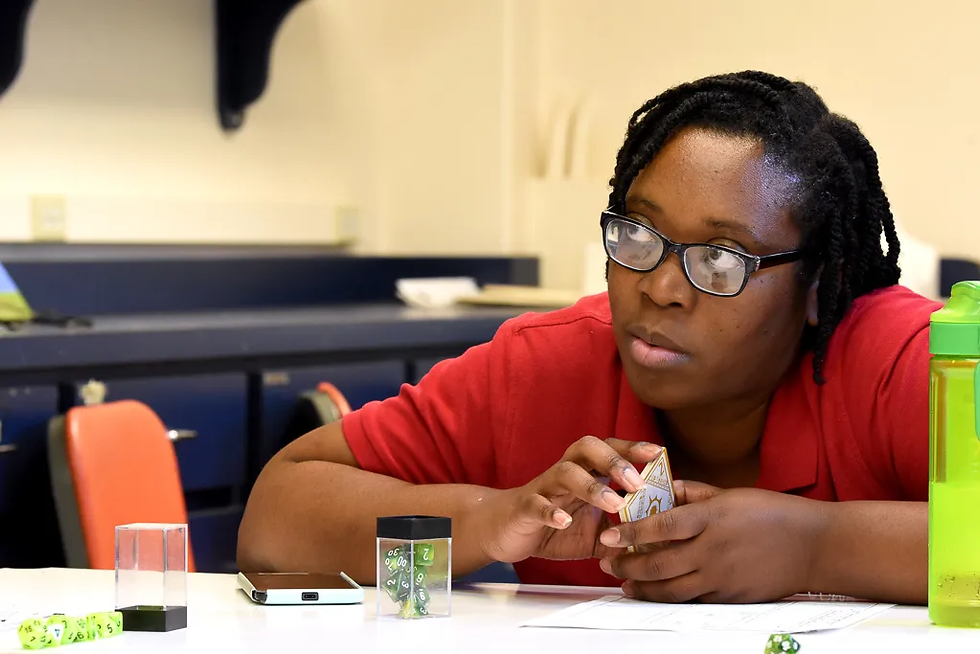
Tabletop role-playing games (TTRPGs)—Dungeons & Dragons, Call of Cthulhu, Cyberpunk RED, whatever system speaks to you—are becoming one of the most powerful, under-the-radar mental health tools available to first responders. They’re not just games. They’re controlled trauma, safe adrenaline, chosen family, and narrative therapy all rolled into one strangely shaped die.
Here’s how they work their magic.
1. You Get to Be Someone Else—Without Losing Yourself
On the job, control is an illusion. Calls come in, scenes unfold, and you react—perfectly trained, but rarely in charge of the story. In a TTRPG, you step into a character who can be as close to or as far from you as you need. Want to be a fearless firefighter orc who charges into burning buildings and always saves the day? Go for it. Want to play a quiet medic who never loses a patient? That’s on the table too.
That distance lets you feel heroic again. It hands you wins you don’t always get in real life. And paradoxically, playing someone else often lets the real you finally speak—about the losses, the close calls, the things you carry that no one else sees.
2. The Table Is a Judgment-Free Debrief
You know how hard it is to debrief with people who’ve never run toward the sound of gunfire or cut someone out of twisted metal. At the TTRPG table, especially tables built for first responders, everyone gets it. The dark humor lands. The long silences are respected. When your barbarian finally opens up about the call that still wakes him up screaming, the party doesn’t flinch—they just listen. Then they pass him the dice and let him smash some goblins.
That combination of intense shared experience followed by genuine emotional safety is rare. It’s gold for people whose nervous systems are wired to “stay ready” 24/7.
3. You Process Trauma by Externalizing It
Good Dungeon Masters know how to weave players’ real emotions into the fiction without ever forcing it. Lost a partner on the job? Your character might be searching for a fallen comrade in the campaign. Struggle with survivor’s guilt? The story might give you a chance to confront it through a moral dilemma with no perfect answer—but one you get to choose.
You’re not “in therapy.” You’re on an adventure. Yet week after week, those sirens get a little quieter. The hyper-vigilance eases when you realize you can face dragons—real and metaphorical—and come out the other side.
Research is starting to back this up. Studies on therapeutic gaming (including programs specifically for veterans and first responders) show reductions in PTSD symptoms, depression, and social isolation. The Department of Veterans Affairs has even recognized TTRPGs as a valid complementary treatment. It’s not woo-woo. It’s evidence-based healing disguised as elf games.
4. You Rebuild the Brotherhood (and Sisterhood) You Thought Was Gone
Shift work, burnout, and the weight of what we see can make us pull away from even our closest crews. TTRPG nights bring regular connection—something to look forward to, people who count on you to show up (as your chaotic neutral rogue, if nothing else). Watching retired cops, active paramedics, and firefighters who hadn’t laughed in years absolutely lose it over a nat 1 at the worst possible moment.
That laughter? It’s medicine.
Where to Start
You don’t need to know what a “d4” is or own a single rulebook. There are groups built specifically for us—by us.
The best one I’ve found is Roll2Heal (www.roll2heal.org). They run online and in-person games tailored for first responders, veterans, and healthcare workers. The DMs are often responders themselves or trauma-informed veterans who speak our language. Games are free or donation-based.
If the sirens are still screaming in your head, maybe it’s time to pick up some dice.
You’ve run into enough burning buildings. Let someone else light the dragons on fire for a while.
Resources & Further Reading
www.roll2heal.org – Free TTRPG sessions designed for first responders and veterans
“The Bodhana Group” – Pioneers in using TTRPGs for therapy
Roll high, friends. You’ve earned it.