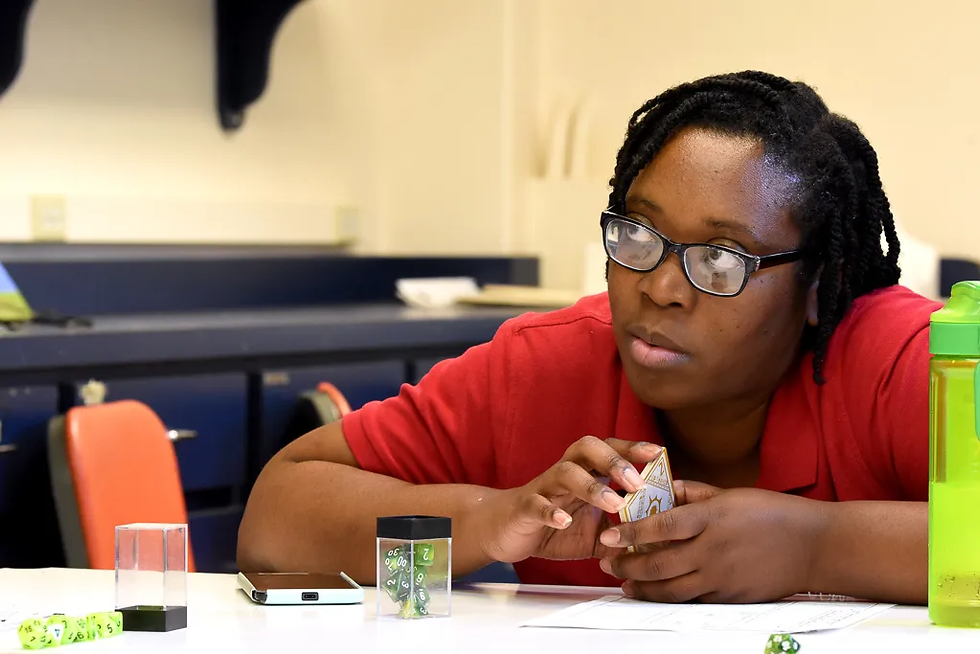
Using Dungeons & Dragons to Talk About Grief During the Holidays

The holiday season is often portrayed as a time of joy, connection, and celebration. For many people, however, it is also a season of profound grief. Empty chairs at the table, traditions that now feel hollow, and the pressure to “be merry” can make loss feel even heavier. When words fail or conversations feel too raw, some grieving individuals and families are discovering an unexpected tool to process those emotions: Dungeons & Dragons.

At its core, D&D is a collaborative storytelling game built around imagination, shared narrative, and emotional investment in fictional characters. Players create adventurers who face danger, loss, triumph, and growth together. Because the stakes are imaginary, the table becomes a uniquely safe space to explore feelings that might otherwise stay buried.
Roll2Heal, a nonprofit organization that uses tabletop role-playing games for therapeutic purposes. One common approach is the “memorial one-shot”: a short adventure where each player creates a character inspired by someone they have lost. Through the game, players watch those beloved qualities; courage, humor, kindness; live on in the story. Another technique invites players to role-play moments they never got to say in real life: a final conversation, an apology, or a simple “I love you.” Because the dialogue happens through the protective veil of character, many find they can finally voice what has been unsaid for years.
This therapeutic power of communal storytelling is not new. In his book Tribe: On Homecoming and Belonging, Sebastian Junger examines how humans evolved to cope with tragedy through tight-knit groups that face hardship together. He writes:
“The one thing that might be said for societal collapse is that it tends to bring people together… Humans don’t mind hardship, in fact they thrive on it; what they mind is not feeling necessary. Modern society has perfected the art of making people not feel necessary.”
Junger argues that grief isolates us in part because modern life often strips away the tribal structures that once made collective mourning natural and necessary. A D&D table, however, temporarily recreates that tribe. Every player is essential: the cleric who heals, the bard who inspires, the quiet rogue who notices the trap no one else saw. When a character in the story dies (or grieves, or rages, or forgives), the entire group bears witness. The loss is shared, and therefore made bearable.
During the holidays, this sense of belonging can be particularly healing. Many families struggle to talk about the person who is missing; mentioning them feels like dimming the festive lights. At a D&D table, that person can be present without overshadowing the gathering. A grandfather who loved terrible puns might inspire a gnomish bard with an endless supply of groaners. A mother known for her protective love becomes the template for a towering paladin who shields the party. The laughter and tears that follow are not a betrayal of grief; they are its honest expression.
Therapists and grief counselors who incorporate tabletop RPGs emphasize that the game is not a replacement for professional support, but a supplement. The structure of turns, the mechanics of dice, and the permission to “be someone else for a while” give the brain and heart a gentle framework to process what prose alone sometimes cannot.
For anyone wondering how to start, Roll2Heal’s blog tells about safety tools like “Deck of Player Safety” and guidance on facilitating emotionally charged games. Many local game stores and community centers now host “quiet table” or “grief-friendly” D&D nights during November and December for this very reason.
This holiday season, if the weight of an empty place at the table feels overwhelming, consider gathering loved ones around a different kind of table, one with dice, character sheets, and miniature heroes. In the shared act of rolling to see whether a fictional paladin can lay a ghost to rest, many have discovered that their own ghosts feel a little lighter.
Because sometimes the best way to speak the unspeakable is to let a half-orc barbarian with your father’s smile say it for you.